3 Questions for...
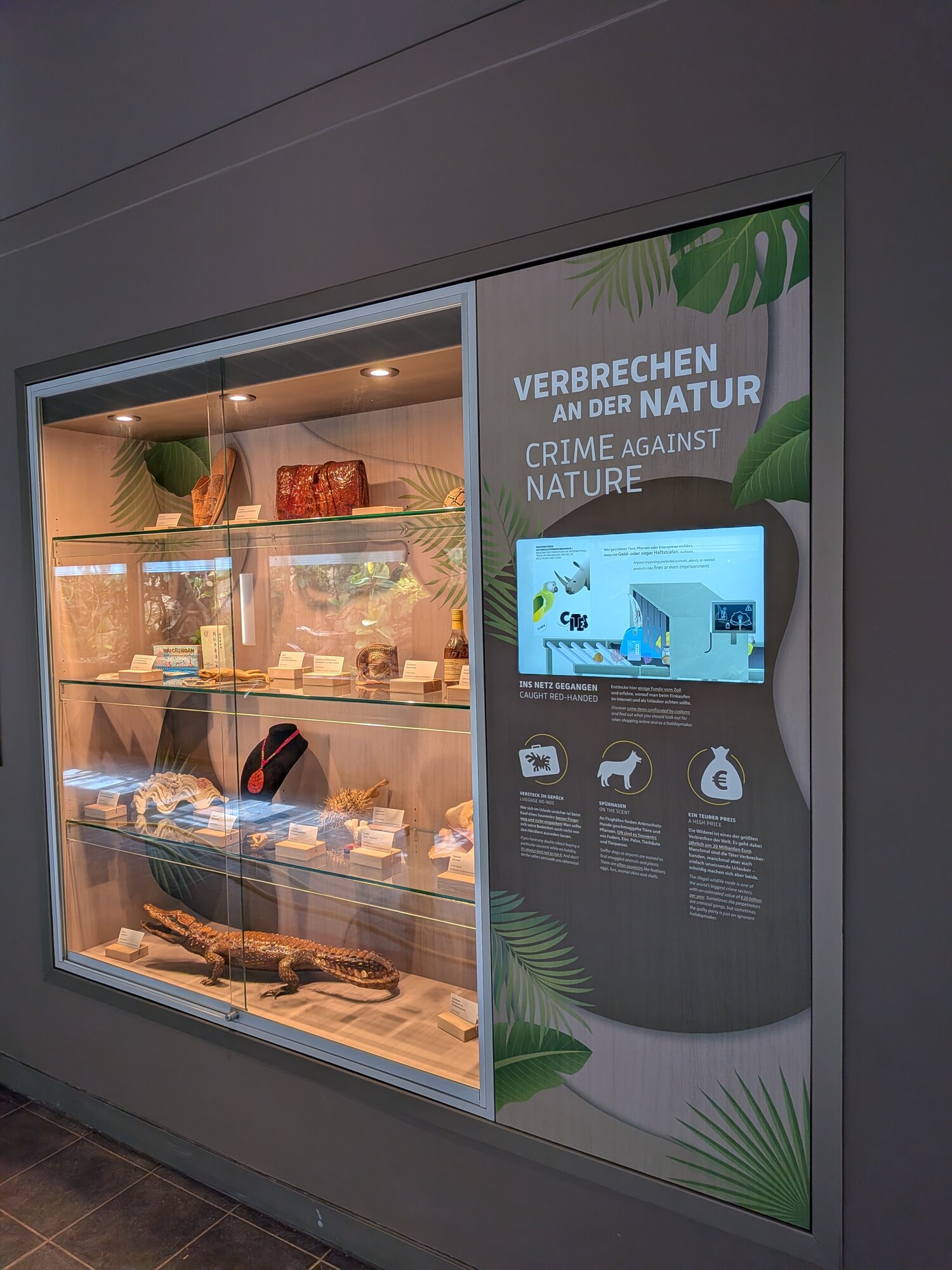
Illegal wildlife trafficking and the trade in products made from protected species are among the greatest threats to biodiversity worldwide. At Berlin Brandenburg Airport (BER), customs authorities play an important role in protecting endangered species. Seized animals and animal products tell stories that go far beyond the moment of confiscation. Some of these items are on display in the species conservation display at Aquarium Berlin. They highlight the consequences of illegal wildlife trafficking and demonstrate why education and awareness are an important part of species conservation.
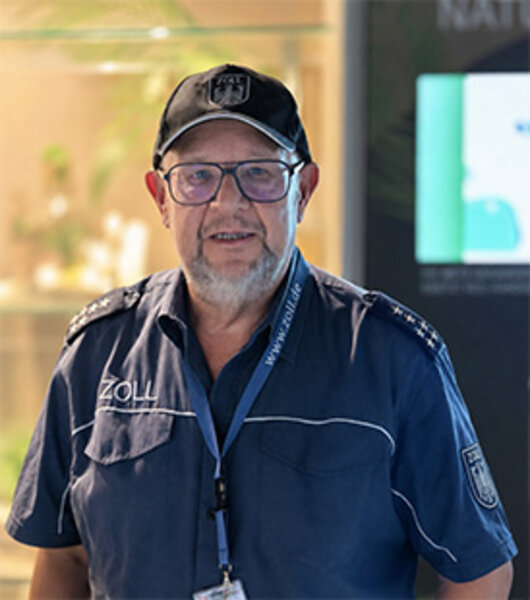
We spoke with Christian Böhm, Head of the Berlin Brandenburg Airport Customs Office, about his many years of experience, particularly memorable cases, and the important cooperation between customs, the zoo and the aquarium.
Editorial team: Mr Böhm, in more than 40 years with Customs, you have seen countless confiscated animals and animal products. Is there one particular exhibit whose story has stayed with you to this day?
Christian Böhm: During the 40 years I have been involved in species conservation, there have been several seizures whose stories have stayed with me to this day. I was transferred to the customs office at Berlin-Tegel Airport at the beginning of 1986, where I took on responsibility for handling these cases. Seizures involving live animals were not always easy – including live monkeys in a birdcage or live venomous snakes in a suitcase.
There is one particular exhibit that I also remember especially vividly. I had to examine and confiscate a stuffed Bengal cat. The Bengal cat had been completely taxidermied and converted into a lamp. The electrical cable came out through the tail, and light bulbs had been inserted as its eyes. I found the sight incredibly disturbing and wondered what kind of person would put such an abomination in their living room. A Bengal cat had to die for this. To this day, this exhibit represents the senselessness and ruthlessness of human behaviour towards the natural world in which we live.
Editorial team: Many visitors to Aquarium Berlin initially see “just” corals or reptile skins in the species conservation display. What do you hope people will understand about illegal wildlife trafficking after visiting the aquarium?
C.B.: Visitors who come to the aquarium and zoo come to see living animals and the diversity of life on our planet. The exhibits in the display are intended to convey that the trade in wildlife and products made from wild animals represents a significant intervention in nature and contributes to accelerating the extinction of species.
The natural world of our planet is under massive threat from human activity in many different ways. Environmental pollution and the resulting rise in the Earth’s temperature, marine litter, the exploitation of nature through habitat destruction, and illegal wildlife trafficking are inevitably leading to catastrophe.
Visitors should recognise that their own actions have an impact – at least when it comes to illegal wildlife trafficking. They support this trade when they buy such products. If they realise that by choosing not to purchase these products they can make a small contribution to protecting species, that would already be a major achievement.
Editorial team: When live wild animals or protected species are seized at BER, customs, veterinary authorities and institutions such as Zoo and Aquarium Berlin work closely together. Why are such partnerships essential for effective species conservation from your perspective?
C.B.: Cooperation between the different institutions is indispensable for enforcing the existing legal provisions on species conservation. When customs authorities at BER seize a live protected animal, the good cooperation between all the institutions involved ensures that the animals can receive medical care as quickly as possible and be housed in appropriate conditions. Customs cannot keep live animals in its evidence storage facilities. There is a lack of specialist knowledge required to care for the animals and, of course, the facilities needed to house them in accordance with legal requirements. This is ensured through cooperation between all the institutions involved. A functioning network is essential and enables Customs to fulfil its assigned role in species conservation.
Editorial team: Thank you!